Sleep Support • Mattress Guide
Aireloom Firm Feel: How to Assess Comfort and Support
“Firm” sounds like a verdict. On a mattress, it is only a clue. The same surface can feel reassuringly supportive to one sleeper and unyielding to another, depending on sleep position, body shape, pressure sensitivity and the layers between the body and the bed’s support system.
That is why a label should begin—not end—the evaluation of an Aireloom mattress. A more useful question is whether the surface keeps the spine comfortably aligned while allowing the shoulders, hips and other pressure points to settle without strain. Answering it takes more than a quick sit or a few minutes on the showroom floor. It calls for attention to construction, fit and the way comfort changes over the course of a night.
Firmness is a sensation, not a measurement
Mattress firmness is often described on a scale, with “soft” at one end and “firm” at the other. The language is convenient, but it is not a universal standard. One company’s firm may feel closer to another company’s medium. Even within the same product line, upholstery, construction and model specifications can produce distinct sensations.
More important, people do not meet a mattress in the same way. A lighter sleeper may remain close to the surface and experience a bed as relatively firm. A heavier sleeper may compress its comfort layers more deeply and feel a different balance of cushioning and resistance. Body proportions matter, too: the hips and shoulders do not press into a mattress with identical force, and a sleeper’s shape affects where pressure is concentrated.
For that reason, there is no single firmness rating that reliably predicts comfort for everyone. Use a label as an initial filter, then test how the mattress responds to your body. The distinction is not merely semantic. It helps separate the feeling of a firm surface from the question of whether that surface provides appropriate support.
Support and cushioning do different jobs
A mattress has to balance two related but separate functions. Its support system helps keep the body from sinking too far and can contribute to a more neutral sleeping posture. Its upper comfort layers influence the first impression: how readily the surface yields, how pressure is distributed, and whether the bed feels cushioned or taut.
A mattress can feel firm at first contact yet still offer some contouring as the upper layers respond to heat and pressure. Conversely, a bed with a plush surface can have a supportive core beneath it. Neither “firm” nor “soft” tells the whole story on its own. What matters is how the layers work together for the individual sleeper.
When assessing an Aireloom option, look for specific, current information about its construction rather than assuming that the brand name or a broad firmness description tells you what is inside. Ask what the comfort layers are made of, how they are arranged, and what supports the center of the mattress. The details can help explain why two mattresses with similar labels feel different. They should not, however, be treated as a guarantee: material names alone cannot predict how a complete mattress will feel to a particular person.
It is also worth distinguishing support from rigidness. A mattress is not necessarily more supportive because it feels harder. If the surface is too unyielding for your body, the shoulders or hips may feel compressed. If it allows excessive sink, the body may feel less settled. The practical goal is a balanced response: enough cushioning for comfort, with a stable foundation underneath.
Start with the position you actually sleep in
Sleep position is a useful starting point because it changes where the body meets the mattress. It is not a rulebook. People move during the night, and individual comfort varies, but your usual position can help you notice what to test.
Side sleepers
Side sleeping concentrates pressure around the shoulder and hip. A firm surface that does not give enough at those points may feel sharp or restrictive, especially during a longer trial. Check whether the shoulder can settle without an uncomfortable sense of being pushed upward. Notice whether the hip feels pressed into the bed, or whether the waist is left unsupported.
The aim is not to sink as deeply as possible. It is to find enough contouring to relieve pressure while maintaining a comfortable line through the torso. A side sleeper who prefers a firm feel may still want some give at the top of the mattress.
Back sleepers
Back sleepers can pay attention to the lower back and pelvis. Does the surface feel stable without creating a gap that leaves the lower back tense? Does the pelvis settle more deeply than the rest of the body, or does the mattress resist movement in a way that feels comfortable? A good test is to relax in your normal position and notice whether you are bracing your muscles to get comfortable.
Stomach sleepers
Stomach sleepers may be particularly alert to the midsection. If the pelvis sinks noticeably, the lower back can feel strained for some people. A firmer surface may help some stomach sleepers feel more level, but “firmer” is not automatically the answer. The mattress still needs to feel tolerable at the chest and shoulders, and pillow height can also affect alignment.
Combination sleepers
People who change position repeatedly need to consider movement as well as stationary comfort. Try rolling from your side to your back and back again. Does the surface allow you to move without feeling stuck? Does it remain comfortable in more than one position? A mattress that feels appealing for a few minutes in one posture may become less convincing if you spend the night in several.
Pressure sensitivity can change the answer
Two sleepers of similar size and position can disagree about the same bed. One may enjoy the clear, stable sensation of a firm mattress; the other may notice pressure at the shoulders, hips or knees. That difference is not evidence that one person is testing incorrectly. Comfort is personal, and areas that are sensitive to pressure can shape the entire experience.
Notice whether discomfort appears immediately or only after you have remained still for a while. A quick test may reveal the surface’s first impression, but it can miss pressure that builds over time. During a home trial, take note of where you feel tension when you wake, whether you change positions more than usual, and whether the mattress feels different after several nights.
Do not confuse ordinary adjustment with a reason to disregard persistent discomfort. A new sleep surface can feel unfamiliar, especially if it differs significantly from the one you have used. But recurring pain or pressure deserves attention rather than being dismissed as something you must simply endure. Personal comfort is not a clinical diagnosis, and a mattress should not be treated as a substitute for medical advice.
How to test an Aireloom mattress thoughtfully
A showroom test is useful when it is treated as a comparison, not a race. If possible, try several options rather than lying on one mattress and asking whether it feels good in the abstract. The contrast can make differences in surface give, support and ease of movement easier to notice.
- Lie down in your usual position. Give your body time to settle instead of relying on a quick press of the hand or a short sit at the edge.
- Test both sides. Try your back, side or stomach as relevant, and include the position you use most often.
- Pay attention to pressure. Note whether shoulders, hips or other areas feel comfortably cushioned, compressed or unsupported.
- Check transitions. Roll over and change positions. A surface should be evaluated in motion as well as at rest.
- Use your usual pillow if practical. Pillow height can affect neck comfort and posture, so a dramatically different pillow may cloud the mattress comparison.
- Ask for model-specific details. Confirm the construction and firmness description for the exact mattress you are considering, not just a family name or general brand explanation.
- Review the trial terms. Understand the home-trial period, return conditions and any fees before making a decision. Policies can vary and may change.
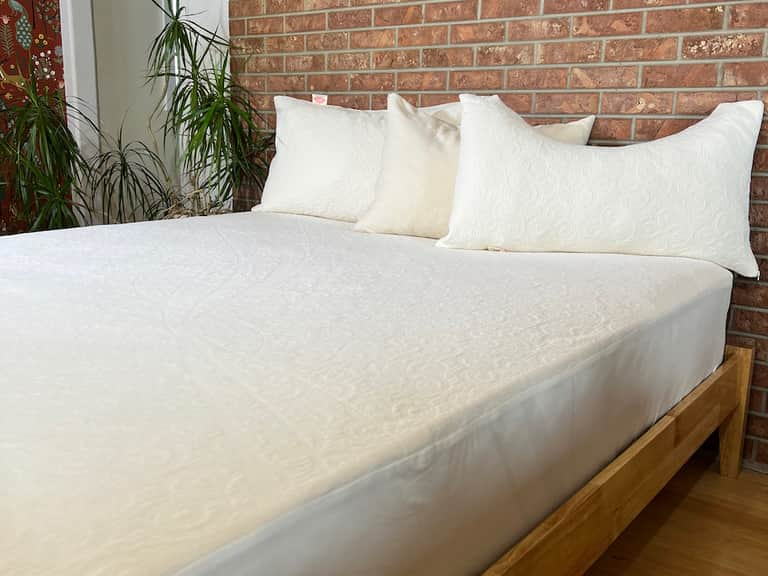
At home, keep the rest of the sleep setup as consistent as possible while testing. A different pillow, an unfamiliar foundation or a thick topper can change the feel of the surface. If you use a protector, choose one that fits correctly and does not noticeably alter the mattress’s response. For example, a stretchy, fitted protector made from organic cotton may add a light fabric layer; its fit and construction still matter when you are trying to assess the underlying feel.
Record a few simple observations each morning: position on waking, pressure or tension, ease of movement, and whether the bed felt too firm, too yielding or balanced. A short log is more reliable than trying to reconstruct several nights from memory. It can also help distinguish a recurring pattern from a single restless night.
Look beyond the firmness label to the build
Construction helps explain a mattress’s behavior, but it does not provide a shortcut around testing. Ask about the comfort layers and support core, the mattress profile, and whether the model is offered with different comfort choices. Where the manufacturer provides specifications, compare the exact model names and configuration rather than relying on descriptions from another version or size.
Layer placement matters. A material close to the surface has a different role from one deeper in the mattress. The top layers affect initial cushioning and pressure relief; deeper components contribute to the overall support response. The interaction of those elements is more meaningful than a single ingredient listed in isolation.
It can also help to ask how the mattress is intended to be set up and maintained. A compatible base or foundation can influence the feel and performance of a mattress. Follow the manufacturer’s guidance, and confirm that the frame or base is appropriate for the model. A mattress placed on an unsuitable or unstable foundation may not perform as expected.
None of these details makes a mattress universally right. Construction information is a tool for understanding what you are evaluating, not a promise that every sleeper will experience the same result.
Body weight, proportions and shared beds
Body weight affects how deeply a person compresses a mattress, which can change the perceived firmness. A lighter sleeper may not engage the comfort layers as much as a heavier sleeper. In turn, two people sharing a bed may experience the same surface differently—one may feel well supported while the other notices pressure or greater sink.
Body proportions matter alongside weight. A person with broader shoulders may need more room for that area to settle when side sleeping; someone who carries more weight around the hips may notice a different response through the middle of the body. These are reasons to test a mattress in your own sleep position, not to assume that a chart can provide a definitive answer.
For couples, evaluate the bed together when possible. Each person should test their preferred positions and consider whether movement on one side disturbs the other. Discuss what “firm” means to each of you: one person may mean a taut surface, another may mean a bed that does not let the hips sink. Clear language can make the trade-offs easier to identify.
When the surface feels too firm—or not firm enough
If an Aireloom mattress feels too firm, first make sure the test reflects the way you sleep at home. Check the pillow, bedding and foundation, and give yourself a reasonable chance to assess the bed under normal conditions. Persistent pressure may suggest that the surface is not providing the cushioning you want, but it is worth checking the trial terms before making changes or adding another layer.
A topper can alter the surface sensation, but it also changes the setup you are evaluating. It may add cushioning, change how the mattress responds, or make a carefully chosen firmness feel less balanced. Before buying one, check whether the mattress’s trial or warranty terms address modifications, and consider whether a different comfort option would be the more straightforward solution.
If a mattress feels too soft, notice where the body seems to settle and whether that feeling persists across sleeping positions. Confirm that the support base is stable and appropriate. Avoid relying on the word “firm” alone as a cure-all: the goal is not maximum hardness, but a surface that feels steady and comfortable for your body.
A practical decision checklist
Before deciding, move beyond the headline description and answer a few specific questions. The more concrete the answers, the less likely you are to mistake a marketing label for a personal fit.
- Which sleep position do you use most, and does the mattress feel comfortable there?
- Do the shoulders and hips have enough room to settle without uncomfortable pressure?
- Does the torso feel stable, or do you notice excessive sinking or a rigid, braced sensation?
- Can you change positions without feeling restricted?
- Have you checked the construction and specifications for the exact Aireloom model?
- Does the mattress work with your foundation, pillow and usual bedding?
- Do you understand the home-trial and return policy before purchase?
The right firm feel is the one your body can use
A firm-feel mattress can offer a stable, reassuring surface. But firmness is not a score for quality, and it is not a substitute for fit. Sleep position, body shape, pressure sensitivity and the construction beneath the cover all influence what a person experiences. A mattress that feels supportive to one sleeper may feel too rigid or too yielding to another.
When considering Aireloom, treat the firmness label as a starting point. Ask what the particular model is made of, test it in your normal positions, and pay attention to both pressure relief and stability. If you can, evaluate the mattress over a home trial rather than relying only on a brief showroom impression. The aim is not to find the hardest surface available. It is to find a thoughtful balance of cushioning and support—one that feels comfortable enough to let you rest without making you work to settle in.